No deposit bonus offers ranked by cashout limits and wagering rules










A no deposit bonus is advertised by its headline number, and settled by the account rules printed underneath it. Those two things rarely get equal attention. A hundred free spins reads as the whole offer; the clause capping what the spins can release, the multiplier applied to whatever they win, and the registration conditions that decide whether any of it pays out sit further down the same page. Online play has become the faster-growing share of the gambling business — the European Gaming and Betting Association put online gross gaming revenue at 47.9 billion Euro for 2024, or 39 percent of the continent’s total, up from 37 percent the year before — and sign-up offers are where much of that competition lands. Below are ten current no deposit bonus packages, grouped by how each one writes its cashout limit, because that single clause does more to decide an offer’s worth than the spin count printed above it.
Key points
- Wagering across these ten packages runs between 3x and 50x.
- A cashout limit comes in three forms: a fixed amount, a multiple of the bonus, or no published figure at all.
- The limits stated here start at 5 Euro and reach 100 Euro.
- Two of the brands below run the same promotional code.
- Registration is restricted to one account for each person, and that restriction takes in households and shared devices.
Defining a no deposit bonus and its activation routes
A no deposit bonus is credit handed over for completing a registration, with no payment from the player beforehand. It arrives as a bonus balance, which is accounted for separately from real money: the bonus balance can be staked but not withdrawn, and only once the attached conditions are satisfied does any part of it convert into funds that can leave the account. That separation is the whole mechanism, and every clause further down a terms page exists to govern the crossing from one balance to the other.
Operators fund these packages as an acquisition cost. A free trial puts a new registration on the books, and the published multiplier and limit are what keep the exposure on each one predictable. None of that is concealed; the cost is simply priced into the conditions rather than into the headline.
Activation happens in one of three ways. Some packages land automatically the moment a registration is accepted, with nothing for the player to enter. Others call for a promotional code, entered on the registration form while the account is being opened. A third kind arrives dormant and needs switching on from inside the account before the spins become playable. The offer states which route applies, and on this list the first two account for all ten.
Ten no deposit bonus offers sorted by how the cashout limit is written
Grouping by the limit clause puts the decisive number first. The first six packages below state a flat maximum, listed from the largest downward. Two more derive the ceiling from the bonus itself, so the figure follows the size of the credit instead of being set apart from it. The last two publish no maximum in their terms, and nothing is inferred here to fill that gap. Spin counts, spin values, multipliers and codes come straight off each operator’s promotional page; a value those pages leave blank is left blank. Entries carry numbers for cross-reference with the table that closes this section.
1. King Billy, the heaviest multiplier on this list
| Item | Detail |
|---|---|
| Limit type | Fixed amount |
| Spins credited | 50 |
| Assigned title | Elvis Frog Trueways (BGaming) |
| Value per spin | 0.10 Euro |
| Wagering | 50x |
| Maximum release | 50 Euro |
| Code | FSBONUS50 |
Fifty spins at 0.10 Euro put the package at 5 Euro, and the 50x multiplier is the steepest figure anywhere on this page. Sitting ten times above the package value, the maximum release is the looser of the two conditions; the 50x multiplier is what will decide the outcome. Elvis Frog Trueways runs a six-reel grid with a respin feature, and the stake is fixed by the operator across all fifty rounds.

2. Goldex Casino, two permitted titles
Goldex credits 30 free spins and lets the player decide where they run. Pragmatic Play built one of the two eligible titles, Book of the Fallen. The other, Aloha King Elvis, came out of BGaming’s catalogue. A 45x multiplier applies to winnings, with the maximum release at 50 Euro, level with the entry above it despite a spin count forty percent smaller. No spin value is given in the published terms, so the package carries no stated worth here. The code GOLDEX30 is entered during registration. Offering two titles from two different studios is unusual on a no deposit package, where a single assigned game is the norm, and it hands the player a genuine choice between an expanding-symbol format and a collect-and-respin one.

3. IceCasino, a 3x requirement
- Limit type: fixed amount, set at 25 Euro
- Spins credited: 50, Pragmatic Play reels — Book of the Fallen
- Value per spin: 0.20 Euro, giving a package of 10 Euro
- Wagering: 3x on winnings, nothing lighter appears here
- Code: none published, so credit arrives with the registration itself
A 3x requirement changes the character of the exercise. Where a 45x or 50x multiplier makes clearing the turnover the main obstacle, 3x is satisfied quickly, and what then governs the outcome is the 25 Euro limit. Pragmatic Play built Book of the Fallen in the long-running book format, around a symbol that expands across the reels during a feature round.

4. VerdeCasino, matching terms on different reels
How close are these two? Identical on every published figure. VerdeCasino credits 50 free spins at 0.20 Euro, a package of 10 Euro, under a 3x multiplier with the same 25 Euro maximum and no code required. Only the reels differ: these spins run across Book of Sirens, which the offer leaves uncredited.
Does the missing studio credit matter? Not to the terms, which are complete without it. It matters only to a player wanting the title’s own published figures, which the game’s own information screen carries, unlike the promotional page.

5. GGbet, the lowest fixed limit but one
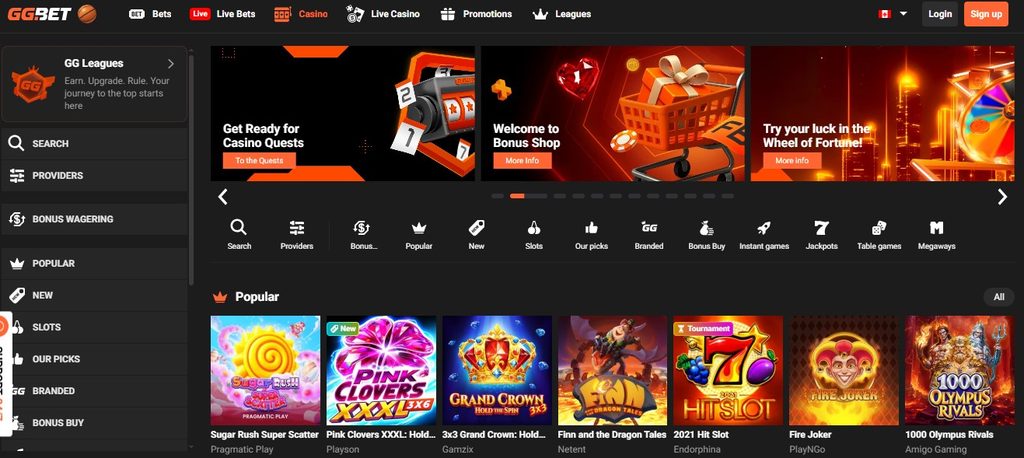
GGbet credits 50 free spins at 0.20 Euro each on Pragmatic Play’s Sweet Bonanza, which puts the package at 10 Euro. The multiplier is 30x on winnings, and with no code published the spins follow registration directly.
The maximum release is 10 Euro, matching the package value exactly. That alignment is worth noticing, because it means the limit binds as soon as the turnover is cleared: whatever the fifty rounds produce, and whatever the 30x requirement is satisfied with, the amount leaving the account stops at the same figure the spins were nominally worth. Tumbling reels and a multiplier feature define Sweet Bonanza, and at 0.20 Euro a round the exposure per spin is double that of the 0.10 Euro packages above.
6. magic365, a limit below the package value
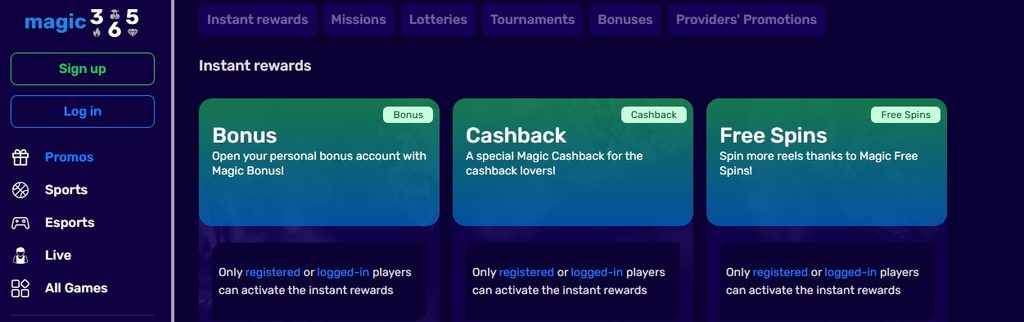
The figures here run as follows: 60 free spins, the highest count in this group; Panda Fortune Rush on the reels, no studio credited against it; 0.20 Euro per spin, putting the package at 12 Euro; a 45x multiplier on winnings; and a release capped at 5 Euro, the smallest on this page; and no code, the spins arriving with the registration. This is the one offer on the list where the package is worth more than the clause governing what can be withdrawn from it — 12 Euro of spins against a 5 Euro limit — and the two figures simply measure different things, the first describing what is staked and the second what may leave.
7. Irwin Casino, a ceiling derived from the bonus
| Item | Detail |
|---|---|
| Limit type | Multiple of the bonus |
| Spins credited | 100 |
| Assigned title | OOF the Goldmine Planet (BGaming) |
| Value per spin | 0.10 Euro |
| Wagering | 45x |
| Maximum release | 10x the bonus, so 100 Euro |
| Code | FSBONUS100 |
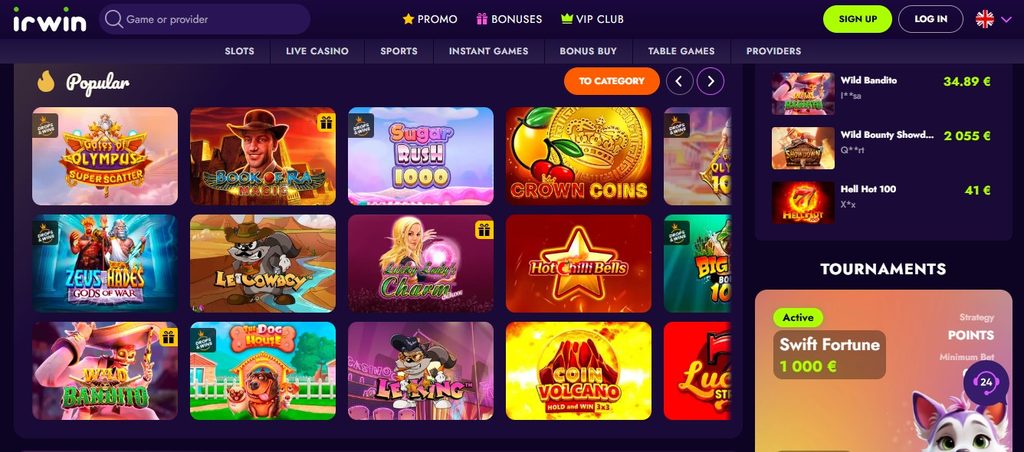
Here the limit is derived rather than declared. A hundred spins at 0.10 Euro make a bonus of 10 Euro, and ten times that gives 100 Euro — the largest maximum on this page. Writing the clause as a multiple means the ceiling moves with the package: a larger credit would lift it, a smaller one would lower it, where a flat figure stays put regardless. BGaming built OOF the Goldmine Planet as a cluster-style grid on a space-mining theme.
8. Beef Casino, the second brand on one code
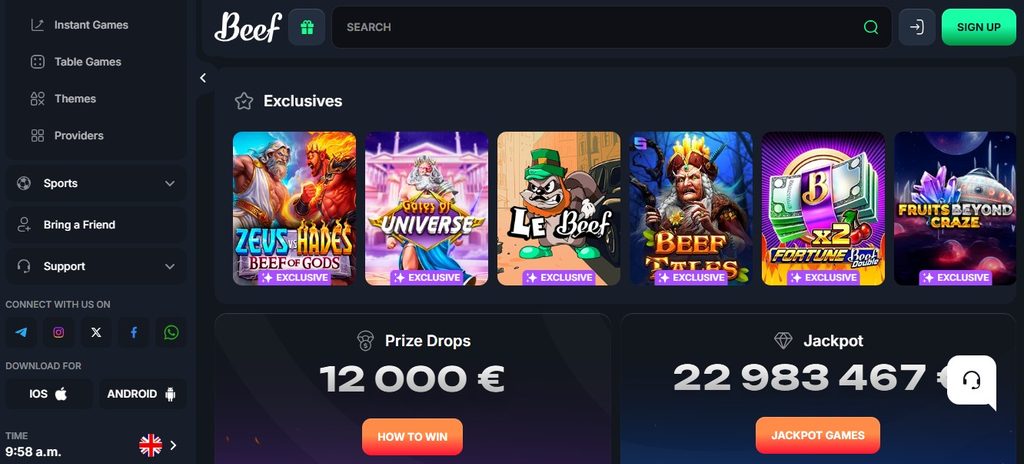
- Spins credited: 100, on the Novomatic release Book of Ra Deluxe
- Value per spin: 0.10 Euro, so a bonus of 10 Euro
- Maximum release: 10x the bonus, giving 100 Euro
- Wagering: 45x applied to winnings
- Code: FSBONUS100, repeating what entry 7 publishes
A single code across two brands, with one set of figures behind it. Spin count, spin value, multiplier, ceiling clause — all identical at entries 7 and 8, and the assigned reels are the only point of difference. No connection between the two sites is published anywhere, and registration rules are applied separately by each, so these are two separate claims rather than one offer counted twice.
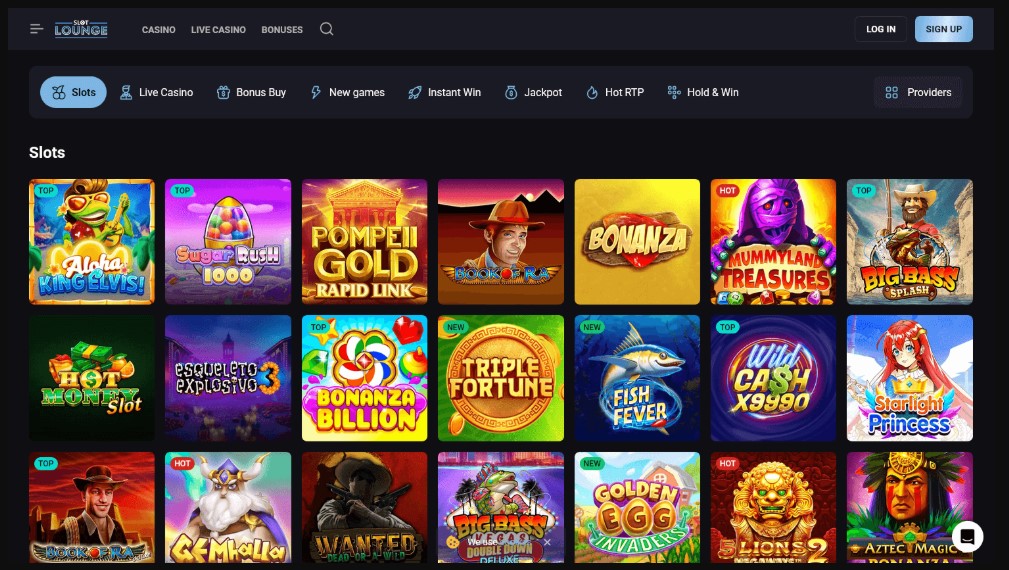
9. SlotLounge, no limit in the published terms
What happens when the terms state no maximum? Nothing can be said about it, which is the position here. SlotLounge credits 30 free spins at 0.10 Euro each — a package of 3 Euro — on the BGaming title Aloha King Elvis, under a 35x multiplier, with the code LIZARD entered at registration. No cashout clause appears in the published conditions and none is assumed on this page.
Is a missing limit an advantage? Not necessarily, and not something to count on. An absent figure in the terms is an absent figure, and the only published constraint on this package is the 35x requirement — lighter than the 45x and 50x multipliers above it, and the second lightest on the list after the two 3x offers.
10. WinBeatz, six eligible titles
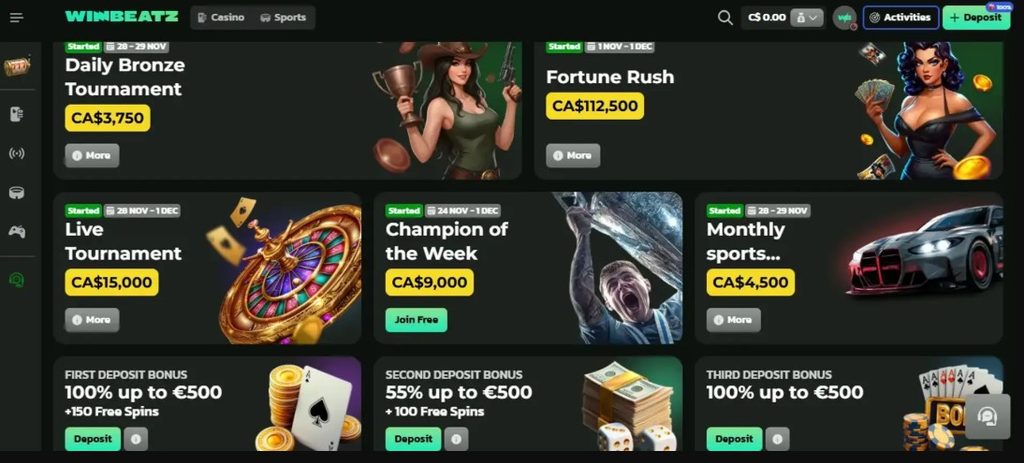
WinBeatz closes the list with 100 free spins and the widest eligible list of the ten: six titles named in the offer, drawn from several different studios, with the player free to spread the spins across them. The multiplier is 45x on winnings, with UPLAY100 as the code supplied during registration. Spin value and ceiling are both absent from the published terms, so neither is stated here. Breadth of that kind transfers the variance choice to whoever is playing: spreading a hundred rounds across six builds of differing reel behaviour produces a different distribution from confining the same hundred to a single grid, multiplier unchanged.
The ten offers compared on their terms
Each figure below is taken from the operator’s promotional page. Dashes mark what those pages do not publish, and none has been filled in by estimate.
| Limit type | Casino | Spins | Spin value | Wagering | Cap | Slot | Code |
|---|---|---|---|---|---|---|---|
| Fixed amount | King Billy | 50 | 0.10 Euro | 50x | 50 Euro | Elvis Frog Trueways | FSBONUS50 |
| Fixed amount | Goldex Casino | 30 | – | 45x | 50 Euro | Book of the Fallen or Aloha King Elvis | GOLDEX30 |
| Fixed amount | IceCasino | 50 | 0.20 Euro | 3x | 25 Euro | Book of the Fallen | – |
| Fixed amount | VerdeCasino | 50 | 0.20 Euro | 3x | 25 Euro | Book of Sirens | – |
| Fixed amount | GGbet | 50 | 0.20 Euro | 30x | 10 Euro | Sweet Bonanza | – |
| Fixed amount | magic365 | 60 | 0.20 Euro | 45x | 5 Euro | Panda Fortune Rush | – |
| Multiple of the bonus | Irwin Casino | 100 | 0.10 Euro | 45x | 10x the bonus, so 100 Euro | OOF the Goldmine Planet | FSBONUS100 |
| Multiple of the bonus | Beef Casino | 100 | 0.10 Euro | 45x | 10x the bonus, so 100 Euro | Book of Ra Deluxe | FSBONUS100 |
| Not published | SlotLounge | 30 | 0.10 Euro | 35x | – | Aloha King Elvis | LIZARD |
| Not published | WinBeatz | 100 | – | 45x | – | Six eligible titles named in the offer | UPLAY100 |
One account for each person
- All ten brands impose the identical restriction: one registration to a person, measured against the name and the details entered when the account opened.
- The wording says person. The enforcement uses whatever an operator can observe, and a connection is observable.
- Households turn that into a practical matter. Two people sharing one computer who both register at the same brand will look, from the operator’s side, like a single person registering twice — and the offer is then voided on both accounts, not merely on the later one.
- Whoever holds the account must own the details on it. Payouts are checked against the registered name, and funds cannot be redirected to anybody else.
- Duplicates get no grace period. The bonus balance goes, and closure of both registrations is a common further step.
- Each brand decides this for itself. Entries 7 and 8 run a shared code, and sharing a code grants no exemption from either brand’s registration condition.
What makes the household case awkward is when it surfaces. A duplicate is rarely caught as the second account opens, because nothing at that moment distinguishes two people from one. It emerges later, when a withdrawal brings the registered details and the payout route into the same view, and by then both accounts have been played out. That lag is the reason the rule is worth settling before registering rather than after.
Of everything on this page, this condition is the one readers are least likely to verify beforehand and the only one with no remedy afterwards.
Working out the wagering requirement
- Establish the base. These ten multipliers attach to spin winnings, never to the credit’s nominal figure, and conflating the two produces a wildly wrong target.
- Multiply. Using numbers chosen purely to demonstrate: 34 Euro won under a 15x condition demands 510 Euro of staking, whereas 15x laid against a 57 Euro bonus would demand 855 Euro. Same multiplier, different base, 345 Euro apart.
- Test the steep end. Entry 7 carries 45x, so 42 Euro of winnings there obliges 1,890 Euro of staking.
- Test the light end. Entry 3 carries 3x, so that identical 42 Euro obliges 126 Euro — a target fifteen times smaller off one starting figure.
- Weigh the categories. A reel-based round usually counts at its full stake. Table games and live rounds frequently count at a discount, occasionally at zero, so wandering off the assigned slot can mean staking money that moves the counter not at all.
- Hunt for a per-round ceiling. Bonus balances commonly restrict how much may ride on one round while the condition remains open, and breaching that restriction is normally answered by removing the balance rather than by trimming the bet.
- Mind the clock. Credit of this type is granted for a bounded time, covering the spins as well as the staking, and a condition left incomplete when that time runs out is recorded as a failure. No slice of the progress survives.
- Know where the counter lives. Staked-against-required appears in the account area, and that readout is the only trustworthy account of where a requirement stands.
What all this means is that a multiplier in isolation tells a reader almost nothing. Pair 3x with a 25 Euro ceiling, then pair 50x with a 50 Euro ceiling, and two unlike propositions emerge — which hands the deciding role to the clause examined next.
The cashout limit and what an offer really returns
A cashout limit fixes the upper bound on whatever this kind of package can ever pay out, and it bites as a withdrawal request goes through processing, not while the reels are turning. Sequence is where readers come unstuck. Turnover is settled first; the ceiling then determines what portion of that settled sum is payable, and the excess is deleted rather than reserved for a second attempt. Entry 8 illustrates it: 290 Euro of winnings arrives at the payout stage and leaves as 100 Euro, with 190 Euro unpayable under the terms as written.
Twenty to one separates the smallest published ceiling on this page from the largest. Nothing else here varies that much — not spin counts, not multipliers, not package values — and that alone justifies reading the ceiling ahead of the headline. Nor does it track generosity: the two biggest spin counts share a ceiling, while the harshest ceiling of all sits beneath a sixty-spin package.
| Casino | Maximum release |
|---|---|
| magic365 | 5 Euro |
| IceCasino | 25 Euro |
| Beef Casino | 100 Euro |
Set the ceiling against what each package is nominally worth and the spread widens further. magic365 credits 12 Euro of spins beneath a 5 Euro ceiling, a ratio below one. GGbet credits 10 Euro beneath a 10 Euro ceiling, exactly one. King Billy and the two multiple-based offers all sit at ten times their package value. So the ratio across this page runs from roughly 0.4 to 10 — a span of about twenty-five to one — and it moves independently of the headline figure, so two offers advertising a hundred spins can be worth quite different amounts.
Those three bracket the range. Entries 7 and 8 add a fourth shape, the ceiling computed from the bonus so that it rises and falls with the credit, and entries 9 and 10 a fifth, where the conditions name no ceiling whatsoever.
Which forms this credit takes
| Form | What arrives in the account |
|---|---|
| Spins on one imposed game | A fixed count at a fixed stake, bound to a single title |
| Free credit instead of spins | A modest bonus balance spendable across a defined catalogue section |
| Spins with no wagering | A fixed count whose proceeds carry no staking condition |
| Spins released in batches | One total count broken up and credited across several days |
| Offers for existing accounts | Credit issued to a registered player instead of at sign-up |
| Formats often mistaken for one | Cashback, referral credit, deposit codes |
Spins on one imposed game describe eight entries here, and the format still dominates the category. Free credit swaps the fixed stake for latitude over where to spend it, typically at a lower advertised figure. Spins with no wagering drop the staking clause, though a harder ceiling or a briefer window usually arrives in its place. Batched spins distribute one total across several days, each batch governed on its own, so clearing the first guarantees nothing about the second. Credit for existing accounts behaves identically but serves retention rather than recruitment. That final row repays attention from anyone comparing advertisements: cashback hands back a slice of logged losses, referral credit hinges on introducing somebody, and a deposit code needs payment first — none of those three qualifies as a no deposit bonus, however alike the marketing sounds.
Credit that converts whole, credit that does not
- Cashable credit surrenders the entire balance once staking concludes — earnings plus the credit behind them.
- Sticky credit, the non-cashable variety, surrenders earnings only. Processing a withdrawal subtracts the credit, whose job as staking fuel has finished.
- Numbers make it plain. Of a 63 Euro balance containing 27 Euro in bonus funds, cashable rules pay 63 Euro and sticky rules pay 36 Euro.
- Spin packages gravitate toward sticky rules. No payment was ever made, so no original stake waits underneath to be handed back.
- Conditions rather than advertisements specify which applies, printed on the same terms page as the ceiling figure and the multiplier.
Placed next to a ceiling, this matters a great deal: advertise two offers at one maximum, deduct the credit from one of them, and they stop being the same offer.
When no wagering condition is attached
A few operators issue spins stripped of any multiplier, which turns whatever the rounds yield into payable funds the moment the balance settles. Real instances exist, scarcely. No entry among these ten belongs in that bracket, since even the mildest condition here — the 3x at entries 3 and 4 — demands staking. Should a genuine zero-multiplier package surface, look for the restriction to have migrated rather than disappeared: fewer spins, a crueller ceiling, one permitted title, a briefer window for spending the credit. Ceiling first remains the rule either way. Zero staking under a punishing ceiling can yield less than mild staking under a roomy one.
The claiming sequence
- Settle eligibility at the outset. Packages like these open only to the countries their own terms enumerate, and a page that loads is no evidence of a page that applies.
- Verify nobody else on the same computer already holds an account at that brand.
- Use details matching the account holder’s documents to the letter. Registration accepts a mismatch happily; the first withdrawal does not, long after the spins are gone.
- Key the code in while registering, where one is published — entry 2 uses GOLDEX30, entries 7 and 8 use FSBONUS100, entry 10 uses UPLAY100. Entries 3 through 6 publish none, so nothing gets typed.
- Click the confirmation link. Credit waits on a confirmed email address, and that link is what sits unopened in inboxes most often.
- Activate the package if the account calls for it, then measure the credited spins against the advertised figure before launching anything.
- Open the named title from within the account instead of finding it through a search box.
- Follow the staking counter in the account area, and note the window inside which it must reach its target.
Step four is where claims collapse most frequently, since a code presented after registration closes is almost never honoured in hindsight.
Requesting a first payout
Withdrawal requests move through a set sequence, and that sequence explains nearly every complaint raised at this point. Staking gets assessed first. Submit a request with turnover still owing and plenty of operators will read it as abandonment of the restricted balance rather than as something to hold until the figure lands. Once staking is settled the ceiling engages, trimming the settled sum as processing runs, with the surplus deleted then and there rather than carried on.
Some route out has to exist on file. A balance built entirely from promotional credit leaves no prior payment to reverse, so the method gets chosen and confirmed during the request itself — a step depositors never meet, happening while the operator’s review window has already begun.
Every brand above verifies the account holder’s identity before releasing a first withdrawal.
Two independent waits follow: the operator’s own review window, then whatever the chosen method takes to settle, the second beginning only when the first ends in approval.
Payment methods and payout routes
| Route | Typical use |
|---|---|
| Local bank transfer services | Specific to one market, generally the best-supported choice inside it |
| Debit and credit cards | Dependable going in, patchier coming out |
| Electronic wallets | Skrill, Neteller and equivalents, usually the quickest outbound |
| Cryptocurrency | Available at a minority of these brands, volatility included |
| Prepaid vouchers | Paysafecard, Neosurf and similar products, inbound only |
Beginning any package above calls for nothing to be paid in, which is what the format exists to offer. Exiting is another story, and all ten eventually require a route.
Bank transfer services vary more than anything else on that list. Every market runs its own, under its own names and with its own reach, and what appears at checkout follows the country where an account was registered rather than any one service being the norm.
Wallets carry a warning best heard before a first deposit. Numerous operators disqualify wallet-funded deposits from promotional eligibility, meaning a player who later tops up that way can find the next promotion closed off — irrelevant to a no deposit package itself, but relevant to whatever follows it.
Vouchers travel one way. Receiving a payout is beyond them, so an account funded by voucher still has to name something else. Add to that the same-route convention most operators apply, sending money back along whichever method brought it in, and the reason a non-depositor must nominate a route at the request stage becomes obvious.
Mobile claiming and tracking
Mobile browsers handle every package here without an install, and conditions travel unchanged across devices — multiplier, ceiling and named title read the same on a handset as on a desktop. Two divergences deserve mention. Registration forms on narrow screens tend to fold the promotional code field behind a tappable link, and that is how codes get skipped at the single moment they can be supplied. Staking counters, meanwhile, usually retreat behind an account menu instead of occupying the main view, turning a check into something deliberate rather than incidental. Against a shared household computer the comparison inverts: a handset is at least one person’s device, which settles any question about who registered.
Lower and higher volatility on the reels
Reel behaviour varies enough between builds to change how a staking condition plays out, and two titles from one studio bracket the range. It matters because the target has to be reached from a small opening balance.
| Lower volatility | Detail |
|---|---|
| Title | Aloha King Elvis |
| Studio | BGaming |
| Appears at | Entries 2 and 9 |
| Behaviour | Returns at shorter intervals, in smaller amounts |
Returns arrive often and small on Aloha King Elvis, keeping a balance turning across more rounds than a volatile build would. Under a mild or middling condition that profile earns its place, because a small target is best approached by simply still having rounds available. At entry 9, where 35x meets a 3 Euro credit, surviving rounds are scarcer than large returns.
| Higher volatility | Detail |
|---|---|
| Title | Book of Kemet |
| Studio | BGaming |
| Behaviour | Long quiet stretches, occasional large returns |
Book of Kemet sits at the studio’s volatile extreme, running an expanding-symbol format: stretches of nothing, broken now and then by something substantial. Under a steep multiplier that shape works in two directions, one early hit building a balance the multiplier then inflates sharply, a flat stretch leaving the condition with no balance to work on. Return-to-player figures appear for neither title here, belonging instead to the information screen within each game, where whichever configuration is live gets reported.
Game studios named in these offers
- Three assigned titles come from BGaming outright, plus one of the pair Goldex offers, making it the most heavily represented house on this page. A catalogue of several hundred reel-based builds, carried almost everywhere, accounts for much of that recurrence.
- Two titles come from Pragmatic Play, as does the alternative Goldex option. Reels, live-dealer tables and additional verticals all feature in what it ships, and its individual releases reach an enormous number of operators.
- One title comes from Novomatic, a house whose standing was made in land-based cabinets and several of whose signature reel formats crossed over to online release from that back catalogue.
- Two offers print a title without crediting a studio, and the six titles at entry 10 originate across several houses. An uncredited studio reflects how a promotional page was written and nothing further, with the builder identifiable from the game’s information screen.
All ten offers in brief
Four figures apiece, enough to scan the list in one pass. Dashes stand where terms publish nothing.
| Casino | Spins | Wagering | Code |
|---|---|---|---|
| King Billy | 50 | 50x | FSBONUS50 |
| Goldex Casino | 30 | 45x | GOLDEX30 |
| IceCasino | 50 | 3x | – |
| VerdeCasino | 50 | 3x | – |
| GGbet | 50 | 30x | – |
| magic365 | 60 | 45x | – |
| Irwin Casino | 100 | 45x | FSBONUS100 |
| Beef Casino | 100 | 45x | FSBONUS100 |
| SlotLounge | 30 | 35x | LIZARD |
| WinBeatz | 100 | 45x | UPLAY100 |
Basis for including these ten
- Conditions are published legibly by every operator here, the multiplier, the permitted title and the ceiling clause all stated outright rather than left to inference.
- Wagering spans the practical extremes across the ten, 3x through to 50x, so a reader sees the multiplier’s effect instead of being told about it.
- Ceilings appear in all three of their written forms: a flat sum, a calculation from the bonus, and nothing published.
- Both activation routes feature, with four of the ten asking for no code during registration.
- Figures reproduced here were read off each operator’s own page as this was written, and whatever those pages omit has been left blank instead of guessed at.
- Size and marketing spend played no part in which brands appear, and the ceiling clause alone determines the order.
Choosing a no deposit bonus
- Begin with the licence. Licensed operators answer to conditions governing game approval, advertising and complaints, and the licence particulars normally appear in a site footer.
- Work through the country list published alongside the offer. Named territories decide eligibility; a page rendering in a browser decides nothing.
- Move to the ceiling, which caps whatever the whole exercise can deliver and swings by twenty to one across this page.
- Restate the multiplier in cash. Forty-two Euro at 45x becomes 1,890 Euro of staking; the identical sum at 3x becomes 126 Euro.
- Record the window allowed for spins and for staking, published in the conditions and every bit as binding as the multiplier itself.
- Look at which account currencies an operator supports. Holding an account in a foreign currency inserts a conversion at either end, and the terms bite in the account’s currency rather than the reader’s.
- Find out which payout methods actually function in the relevant country, because a settled balance needs somewhere to go and availability shifts between markets.
- Make sure site and support both work in a language the reader handles well enough to follow a conditions page, since disputes get argued in that language.
- Pin down cashable against sticky, which decides what finishing the staking condition hands over.
What a support desk can resolve
What marks out a channel worth having? Live chat staffed by somebody able to open the account, as against a form that issues a reference number and little else. A stated response time that holds. And a help page declaring which channels run and when, rather than leaving a reader to discover at two in the morning that none of them do.
Is language a real factor? More than it looks. Conditions pages get translated far more often than support desks do, and reading an offer comfortably while being unable to argue about it in the same language is a disadvantage that lands exactly when it hurts.
And when an offer or a withdrawal is refused? Request the specific clause in writing. An answer naming no clause is itself informative, and the licence will identify a complaints body or an approved dispute service as the following step. Retaining the original conditions page, the account history and the correspondence shortens that process considerably.
Licensing, legal age and tax on winnings
Licensing of online casinos follows one broad pattern wherever it happens. An operator applies to an authority, hands over its systems and games for assessment, and takes on standing obligations about advertising, game approval, the handling of player money and the resolution of complaints. How much authorities demand, and how closely they watch afterwards, differs a great deal; several run licensing regimes serving operators internationally, the Malta Gaming Authority, the Curaçao Gaming Authority and the Isle of Man Gambling Supervision Commission among them by way of illustration. Footers normally publish a licence number and the body that issued it, and an operator reluctant to name either has said something useful.
Minimum age is fixed by jurisdictions rather than by operators, and it is not consistent between them. Whichever figure governs a particular reader is the figure in that reader’s own jurisdiction, while the operator’s conditions set out the age requirement attached to the account. Because no single number applies everywhere, these offers publish the requirement instead of a figure.
Coverage follows the same logic. Each package is released against a list of countries published with its conditions, and sitting outside that list removes eligibility even where the site itself opens normally. Operators police this at registration and, more uncomfortably, again at the point money is withdrawn. The list exists because a licence authorises an operator to serve particular markets and not others, and because promotional rules differ between them: an offer lawful in one place may breach advertising conditions in another. That is why the country list sits in the terms rather than being handled by blocking the site, and why a player travelling does not acquire eligibility by arriving somewhere the offer runs.
Tax on winnings diverges as much as licensing does. Certain jurisdictions leave recreational gambling winnings untaxed, others treat them as income, and a handful draw a line between recreational and professional play. None of the offers above answers that question, and the only place to answer it is the law where a reader lives.
No deposit bonus or deposit bonus
- Price of admission: nothing changes hands here, while matched credit is computed from a percentage of the sum transferred in.
- Magnitude: nominal worth across the ten above runs from 3 Euro to 12 Euro, whereas matched credit scales with a deposit and climbs much higher.
- Multiplier: 50x is the steepest figure here, matching or exceeding what many matched packages request, so no deposit credit is not dependably the easier road.
- Ceiling: firm caps on releasable sums are standard for no deposit credit and far less usual for matched credit, the deposit remaining the player’s property throughout.
- Permitted catalogue: these offers bind the spins to one named title, while matched credit tends to open a broad stretch of the games list.
- What is risked: time, in the first case. Real money, in the second, behind comparable conditions.
Different jobs, in short. One audits an operator for free; the other sweetens terms on money already staked.
Where these offers help and where they do not
| In favour | Against |
|---|---|
| Nothing changes hands to begin with | A ceiling bounds every possible release |
| An operator can be assessed for free | Multipliers climb to 50x across this list |
| Conditions are all published pre-claim | Usually a single title is permitted |
| Four of the ten require no code | A code missed while registering cannot be added |
| Starting needs no payment route | A payout route still gets nominated and confirmed |
| The named title can be examined first | Unspent spins lapse when their window shuts |
| The staking counter is visible in the account | Fractional progress is never credited |
| Conditions state whether the balance converts whole | A shared household machine complicates registration |
What cancels a no deposit bonus
- A second sign-up at one brand from inside a single household, which voids the offer across both accounts and is the only item here that cannot be repaired later.
- Betting above the permitted amount per round where conditions impose one, answered as a rule by deleting the balance rather than by adjusting the bet.
- Spinning a title the offer does not permit. Eight of these ten name exactly one game, and spending credit anywhere else counts as misuse.
- Supplying the code once registration has finished rather than during it, a published code forming part of the sign-up and almost never being applied afterwards.
- Letting credited spins expire unspent, at which point they vanish with no substitute offered.
- Running the staking window out with the condition unmet, which takes the balance and the progress together.
- Signing up with details that diverge from the account holder’s documents, a divergence that only emerges once a withdrawal is sought.
- Asking for a withdrawal before staking concludes, which at many operators deletes the credit rather than parking the request.
No deposit bonus questions answered
Could two members of one household both claim an offer?
Not dependably. Written per person, the rule is policed on what an operator can observe, and two sign-ups at one brand off the same connection usually register as a duplicate.
Is a shared device a problem on its own?
Only if a pair of accounts ends up at one brand. A single person registering from a shared computer presents nothing unusual.
What becomes of a duplicate account?
Voiding of the bonus balance, typically across both sign-ups rather than the later one, and sometimes closure of both.
Why do registration details have to match?
Because withdrawals are checked against the registered name, so a divergence found then halts the payment instead of the sign-up.
Can one brand be claimed twice?
It cannot. Operators release one no deposit package per account, which makes a second package a second brand.
What does a ceiling written as a multiple mean?
That it is calculated off the bonus rather than set independently, so it climbs or falls as the credit granted does.
Can a withdrawal reach somebody else?
No. A route has to carry the account holder’s own name, and third-party details are rejected during verification.
What voids a bonus mid-session?
Usually a bet over the permitted maximum, or a round spun outside the permitted titles.
Where does progress show up?
The account area, as staked against required, generally filed under a bonus or promotions heading.
What if a session gets interrupted?
The balance is unaffected. Credited spins stay put, and the windows keep counting whether anybody is signed in or not.
Which rule warrants reading first?
The ceiling, because everything else is bounded by it and the remaining conditions merely describe the route there.
Controls for keeping play in check
Tools that operate ahead of play rather than during it are a licensing requirement, and they live in the account area where they take hold at once:
- Deposit limits, by day, week or month, which no account can raise without waiting.
- Loss limits, bounding what an account may lose over a chosen span irrespective of deposits.
- Session limits and prompts, breaking off play at a predetermined point instead of trusting judgement.
- Cooling-off, which locks an account briefly without closing it.
- Self-exclusion, blocking access across a longer term, and increasingly operated by licensing regimes across every operator they license at once instead of one site at a time.
Lifting a conservative limit later is far simpler than recovering a loss. Because claiming costs nothing, these offers tend to receive less scrutiny than funded play, though they warrant the same controls. Support services relevant to a site’s own players are published by each licensed operator on its responsible gambling page. What these offers provide is entertainment, not earnings, and nothing written above changes that.